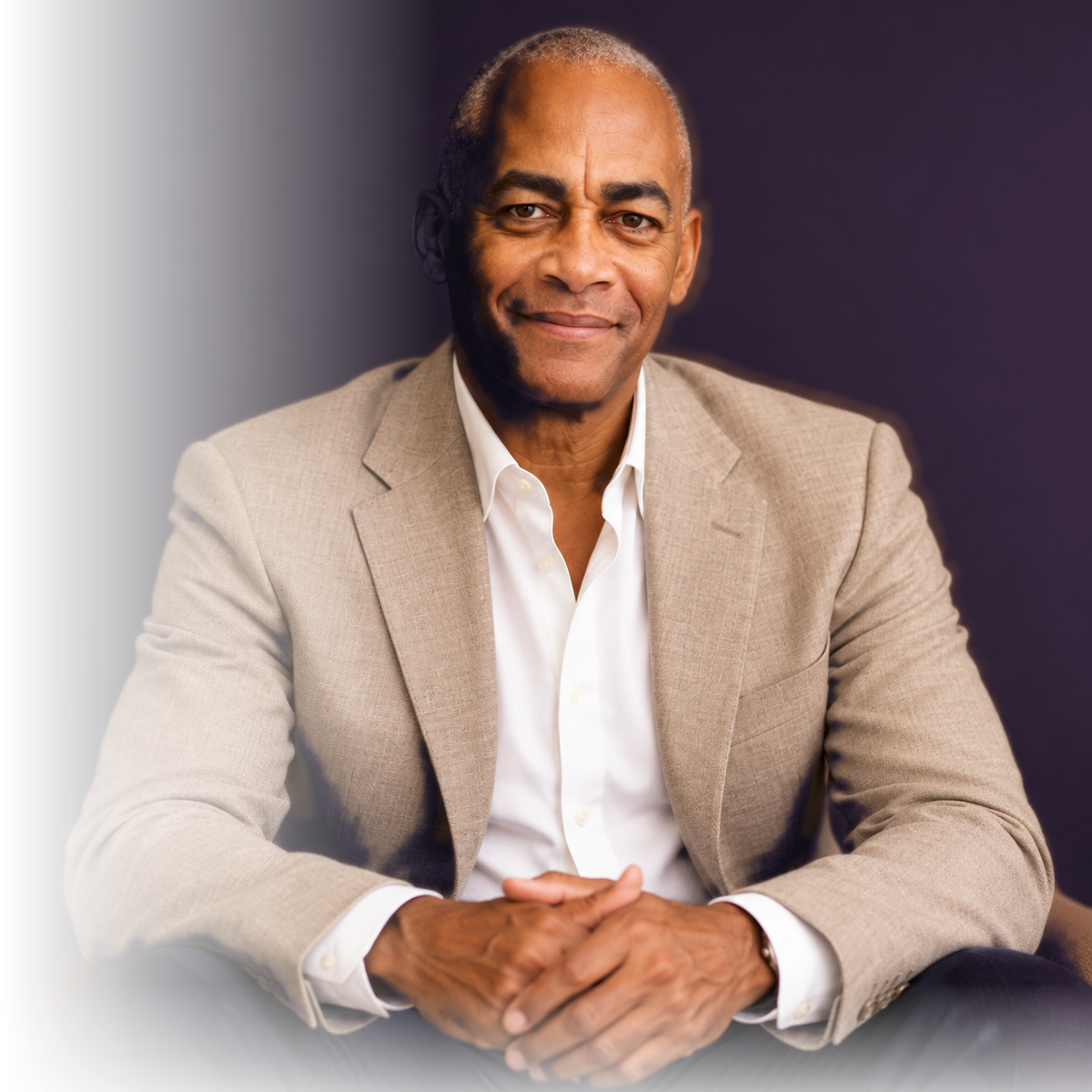
Not all at once, and not from a book. The first steps are the years I spent inside it without seeing the pattern. After that I knew where to look.
TO BEGIN WITH
Croupier in a casino
To be hired you needed three things: French, mental arithmetic, and a presentable appearance. I had all three, so I was hired. I barely needed the French afterwards.
Only years later did I understand why those particular requirements were on the list. Not because they explained anything, but because you could verify them in a twenty-minute interview.
The casino didn’t have a staffing problem. It had a design problem.
LATE NINETIES · THE NETHERLANDS
Financial adviser
Pensions and annuities, driving to people’s homes every day with a folder under my arm. I knew the products, the numbers and the tax rules, and I knew exactly how to handle objections.
And still most people bought nothing. Until one day I stopped talking and started looking. That conversation at the kitchen table is in chapter 1.
The less I talked about my product, the more likely people were to buy it.
2002 · ADDIS ABABA
Mobile banking — banking without a bank
In 2002 I started building mobile banking with my partners in the Netherlands. A few years later the company moved to Addis Ababa to do something no one thought possible: banking on an ordinary mobile phone, in a country with almost no banking infrastructure.
As co-founder and Director of Marketing Operations I sat with regulators, ministries and banks. The team taught people who had never held an account how to receive and send money by text message.
The technology was never the problem. The question was whether people dared trust their money to a phone. That isn’t a technical question but a matter of trust, and we solved it by making it as small as possible: first receive money from someone you know, and nothing more.
Today that is how East Africa banks.
IN PARALLEL · AMSTERDAM & MANILA
Short Stay Group — apartments in a market that didn’t exist
At the same time I was working in Amsterdam on something completely different. Short Stay Group had just started renting apartments for a few weeks or months. A market that officially didn’t exist: hotels were hotels, houses were houses, and there was nothing in between.
I was hired for marketing and sales, and set up our own call centre in Manila handling the whole customer journey, from first click to check-out. Three desks: sales, customer service and helpdesk.
Everyone asked how we could answer more calls. I asked why people were calling at all. It turned out not to be about the phone. Is the neighbourhood safe for a family? Are there really four towels for four people? Can I still cancel?
The team started answering those questions straight away and sent the matching apartment and a booking link with it. Revenue went up. Short Stay Group grew to a thousand apartments in Amsterdam, Paris and Barcelona. Booking.com started on the same Amsterdam street.
They weren’t calling with a question. They were calling because they were not yet at ease. Once we answered that trust instead of the question, cancellations fell sharply.
AFTER MANILA · INTERNATIONAL
International sales and marketing
Among other things, enterprise software implementations. A different scale, a different language, different amounts. Projects where dozens of people have to say yes before anything happens.
The business case always added up. That was never the problem. The problem was that somewhere in the chain sat someone wondering whether he could handle this himself, and that question was never asked out loud.
Agreement is not action. “You’re right” is not a decision.
THEN · THE NETHERLANDS
Verduurzamen Doen We Samen
The technology was there. The installers were there. The subsidies were there. The advisers were standing by. Everything a business owner appeared to need was available.
And still it stayed remarkably quiet. No one wanted to take the first step.
The assumption is that business owners don’t invest because it costs too much. So for twenty years the government has been lowering the price with subsidies. But the business owner isn’t doubting the price at all. He can’t judge whether it suits his building, he distrusts the installer who is also the salesman, and he doesn’t know whether he can take this on.
Three open questions, and none of them is about money. That is why every project of ours starts with a baseline session in which nothing is sold, independent of whoever installs it later.
A subsidy is fuel. For twenty years the government has been throwing fuel on a fire that has no oxygen.
2025 – 2026
AskHenk
For twenty years websites were brochures. Visitors got lost in menus, forms sat unanswered for days, chatbots irritated more than they helped.
AskHenk is built on exactly the same approach as that call centre in Manila, only without anyone having to stay awake. The same desks, now inside Henk.
Here too the technology isn’t the problem. The question is whether someone dares believe a machine. That is why Henk asks for nothing, records nothing and sells nothing.
AND NOW
This book
Mobile banking, hospitality, sustainability, AI. A different sector, a different amount, a different language. And every time the same thing: the solution had worked for ages and nothing was decided, until we stopped explaining and went looking for the question that was still open.
That isn’t a trick and it isn’t a talent. It is a pattern, and it is the same pattern every time. It just took twenty years to get a name.